 (208) 991-3502
 Meridian, ID






 January 29, 2026
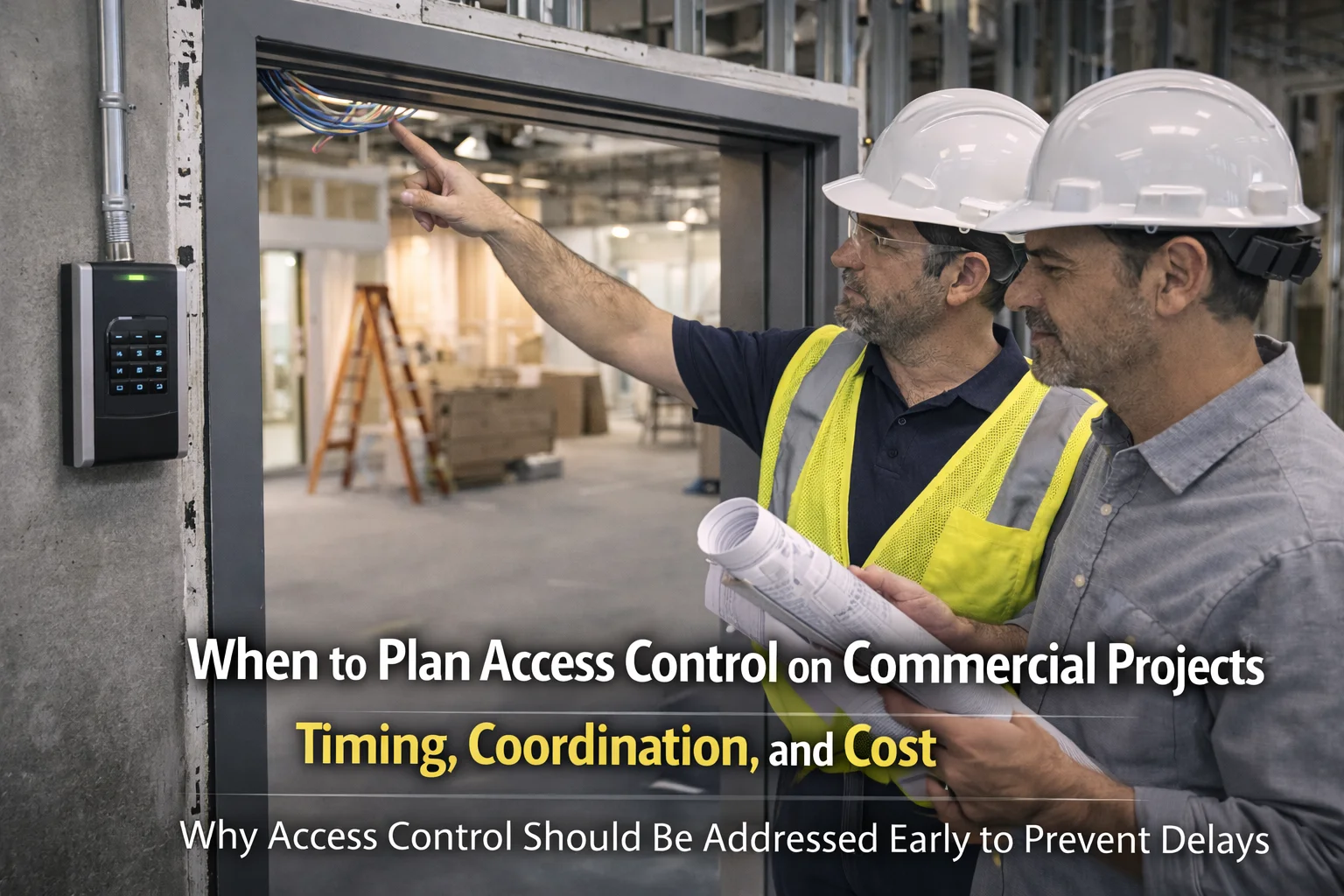
Access control systems are easiest to install when they’re planned early—not after doors are already in place. This article explains when access control should be addressed during commercial projects and how early planning prevents delays, rework, and added costs. Written for general contractors, electricians, and commercial project teams.
Why Access Control Gets Missed in Early Planning
On many commercial projects, access control is treated as a finish item.
Doors are installed. Hardware is selected. Power is roughed in. Only then does someone ask how credentials will unlock those doors.
By that point, options are limited. Wiring paths are fixed. Door prep may be incomplete. What should be a clean install becomes a workaround.
The problem isn’t technology. It’s timing.
Access Control Touches More Than Just the Door
Access control systems affect several parts of a building.
They involve door frames, locking hardware, power, low-voltage wiring, and network connectivity. They may also integrate with cameras, alarms, and building management systems.
Because of this, access control decisions influence multiple trades. Planning them late creates conflicts that ripple through the schedule.
Early planning aligns these pieces before they collide.
The Best Time to Address Access Control
The ideal time to plan access control is during early design and pre-construction.
This allows teams to:
Select the right door hardware
Coordinate wiring and conduit paths
Allocate space for controllers and network equipment
Plan power and backup requirements
When these decisions happen early, installation becomes straightforward instead of reactive.
Door Hardware Decisions Matter More Than Expected
Not all doors are access-control ready.
Some locking hardware requires specific door frames. Others need power transfers or concealed wiring. These details are much easier to address before doors are ordered and installed.
Planning access control early avoids replacing hardware or modifying finished doors later.
How Late Planning Impacts Schedules
When access control is introduced late, schedules suffer.
Ceilings may need to be reopened. Walls may need to be patched. Inspections can be delayed. Turnover dates slip.
These delays are rarely reflected in original schedules, which makes them harder to absorb.
Early planning protects the critical path.
The GC’s Role in Access Control Timing
General contractors are in the best position to keep access control on track.
By asking early questions—How many controlled doors? What systems are planned? Who is responsible for scope—GCs prevent surprises later.
Including access control in early coordination meetings sets clear expectations across trades.
Electricians and Low-Voltage Teams Must Coordinate Early
Access control sits at the intersection of power and data.
Electricians often support power and door hardware. Low-voltage teams handle readers, controllers, and system wiring. Without coordination, gaps appear.
Early planning ensures each team knows their role and installs stay clean.
Renovations and Retrofits Require Even Earlier Planning
In renovation projects, planning becomes even more critical.
Existing doors, frames, and pathways may limit options. Early assessment helps teams choose systems that fit the building instead of forcing incompatible solutions.
In occupied buildings, early planning also reduces disruption.
Why Early Planning Saves Money
Most access control cost overruns come from rework.
Replacing doors, adding conduit late, and patching finishes cost far more than doing it right the first time.
Early planning keeps budgets predictable and avoids unnecessary labor.
Final Takeaway
Access control systems work best when they’re planned before construction begins—not after doors are installed.
Early coordination leads to cleaner installs, smoother schedules, and better long-term results. Late planning leads to compromises.
For commercial projects, access control timing matters.