 (208) 991-3502
 Meridian, ID






 January 27, 2026
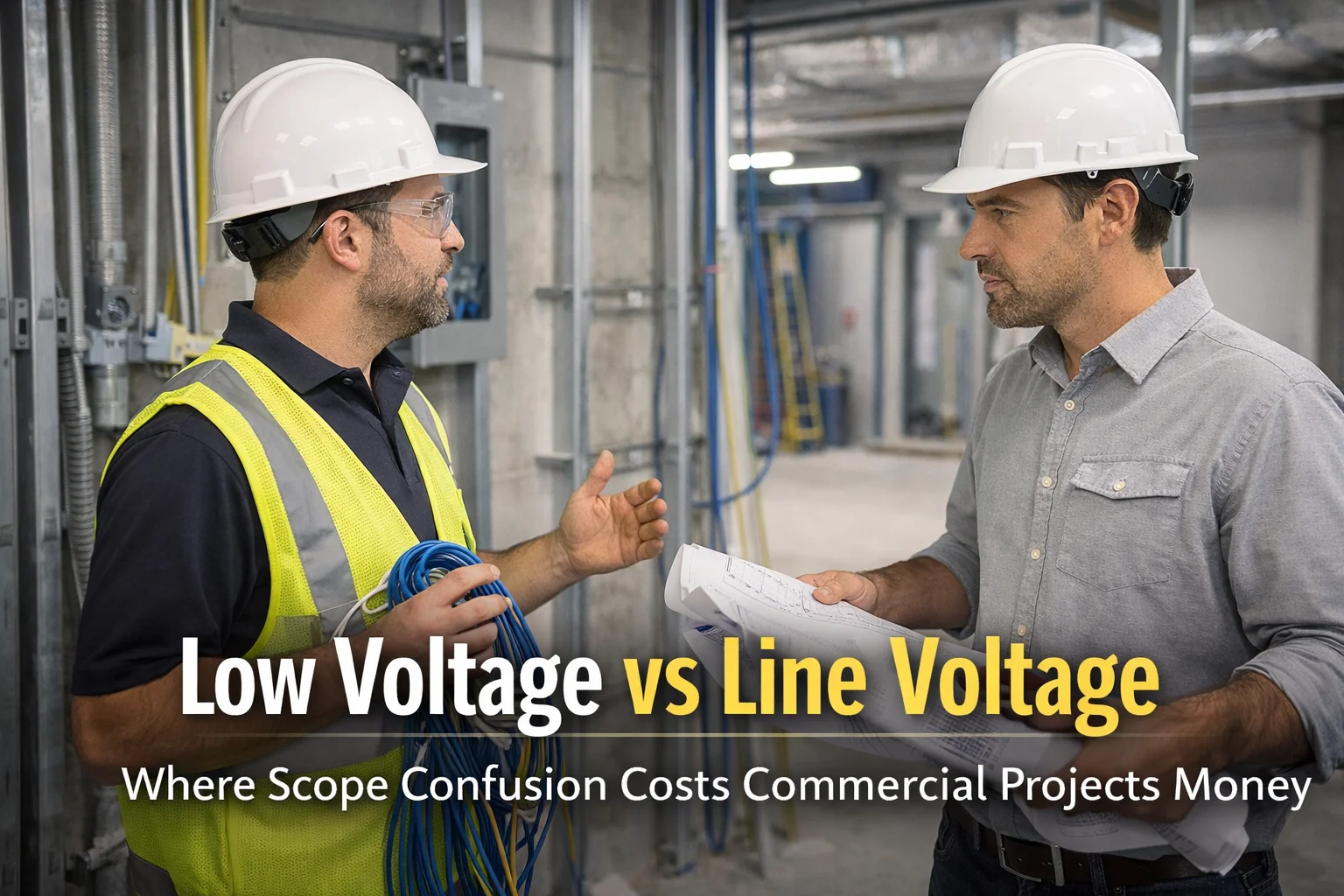
Scope confusion between low-voltage and line-voltage work is one of the most common causes of delays and rework on commercial projects. This article explains where responsibilities often overlap, why assumptions break down, and how clear scope definition early keeps projects on track. Written for general contractors and electricians managing real-world jobsites.
Why This Problem Keeps Showing Up on Commercial Jobs
Most scope problems do not come from poor workmanship. They come from assumptions.
On commercial projects, it’s common for teams to assume someone else is handling part of the low-voltage or electrical scope. Those assumptions often hold until installation begins. That’s when gaps appear.
By then, schedules are tight and fixes are expensive.
Understanding where low voltage ends and line voltage begins helps prevent these issues before they affect the project.
What Line Voltage Typically Covers
Line voltage work usually includes systems that deliver power to the building and its equipment. This often involves electrical panels, branch circuits, lighting power, and receptacles.
Electricians are also responsible for grounding, bonding, and meeting NEC requirements tied to power delivery. In many cases, they install conduit and boxes that support both power and low-voltage systems.
This overlap is where confusion often begins.
What Low Voltage Typically Covers
Low voltage systems focus on communication and control rather than power delivery.
This includes data cabling, cameras, access control, Wi-Fi, AV systems, intercoms, and building technology. Many modern devices are powered over Ethernet, which removes the need for a traditional power outlet but still requires careful planning.
Low-voltage contractors design, install, terminate, test, and document these systems.
Problems arise when it’s unclear who supports shared infrastructure.
Common Gray Areas That Cause Delays
Scope confusion often appears in predictable places.
One example is conduit. On some projects, conduit is assumed to be part of the electrical scope. On others, it’s expected that low voltage will provide it. If this is not defined early, pathways may be missing when low-voltage installation begins.
Another common issue is backboxes. Electricians may install them without knowing device requirements. Low-voltage installers then arrive to find boxes that are too small or in the wrong location.
PoE devices also create confusion. Cameras, access control panels, and wireless access points may not require a power outlet, but they still require proper infrastructure. When this isn’t planned clearly, last-minute changes follow.
How Scope Confusion Impacts Schedules and Budgets
When scope is unclear, delays cascade.
A missing conduit delays cable pulls. Delayed cable pulls delay terminations. Delayed terminations delay system testing. Each step pushes the schedule further out.
Rework also increases cost. Opening finished walls, rerouting pathways, or changing device locations after installation adds labor and materials that were never part of the original plan.
Clear scope definition prevents these issues.
The Role of the General Contractor
General contractors play a key role in preventing scope confusion.
By coordinating early discussions between electricians and low-voltage contractors, GCs can define responsibilities before work begins. This includes confirming who provides conduit, boxes, sleeves, and pathways.
These conversations take little time but remove major risk from the project.
Why Electricians Benefit from Clear Boundaries
Electricians often feel the impact of scope confusion directly.
Late changes can lead to rework, failed inspections, or schedule pressure that has nothing to do with workmanship. Clear scope protects electricians by setting expectations early and reducing last-minute adjustments.
When roles are defined, installations are cleaner and inspections go more smoothly.
The Simple Fix: Define Scope Early and Document It
Most scope issues are preventable.
The fix is simple:
Define responsibilities early
Document them clearly
Confirm assumptions before installation begins
This approach saves time, reduces stress, and leads to better outcomes for everyone involved.
Final Takeaway
Low voltage and line voltage are different scopes, but they share space and infrastructure.
When responsibilities are unclear, projects slow down. When scope is defined early, teams work better together.
For commercial projects, clarity is not optional—it’s essential.