 (208) 991-3502
 Meridian, ID






 January 28, 2026
Access control systems are no longer just about locking doors—they’re about managing people, protecting assets, and creating safer commercial spaces. This guide explains how commercial access control systems work, why they matter, and how to plan them correctly for offices, hotels, and commercial buildings. Written for business owners, property managers, and construction teams.
Why Access Control Has Become Essential for Modern Businesses
In commercial buildings, knowing who can access which areas—and when—is no longer optional.
Traditional keys worked when buildings were simple and teams were small. Today’s businesses operate longer hours, employ more people, host visitors, and manage sensitive areas. Keys alone cannot keep up with those demands.
Access control systems give businesses control, visibility, and accountability. They help protect people, property, and operations without slowing daily workflows.
That’s why access control has become core infrastructure in modern commercial spaces.
What Is a Commercial Access Control System?
At its core, an access control system decides whether a person is allowed to enter a space.
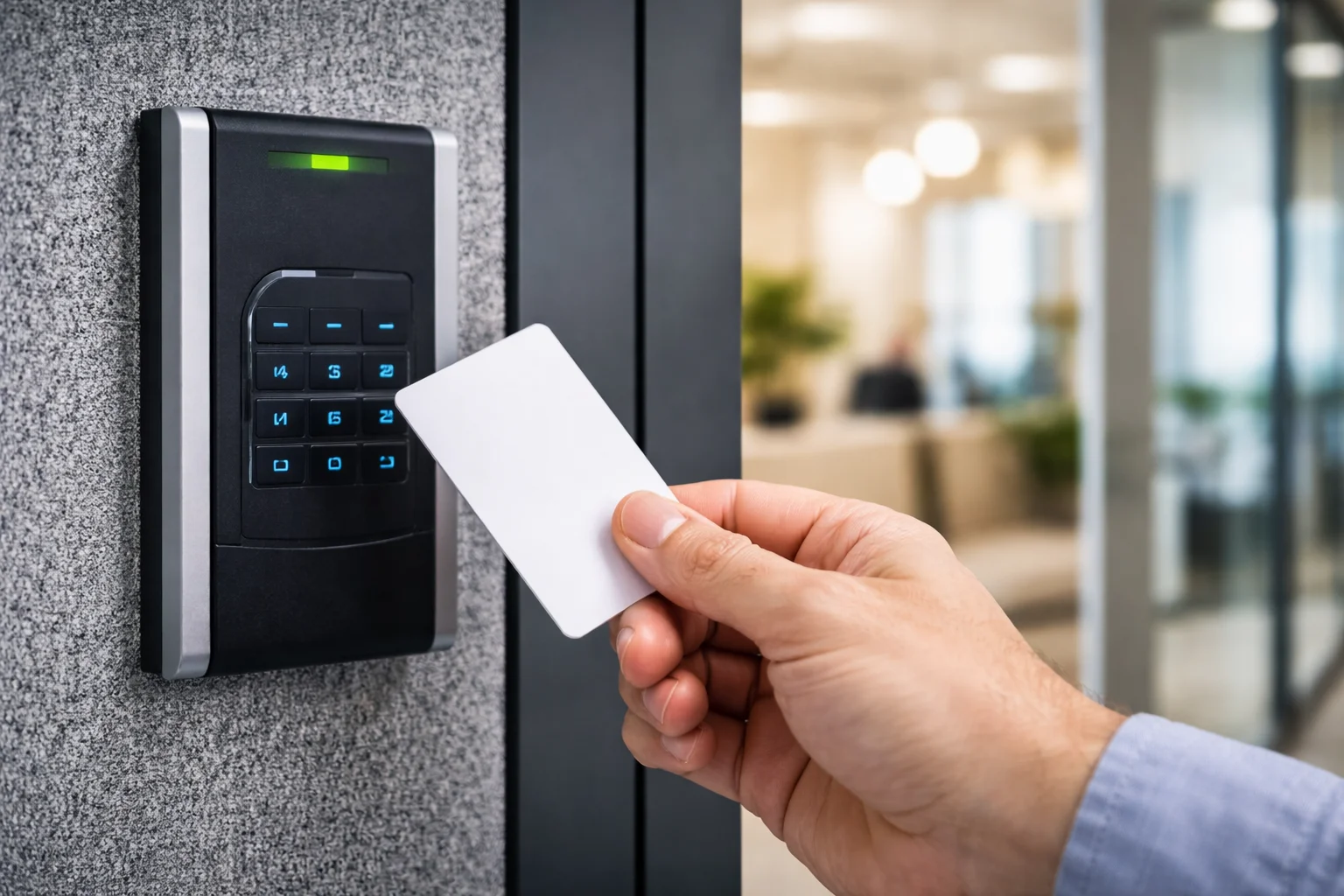
Instead of using physical keys, access control relies on electronic credentials. These may include key cards, fobs, mobile apps, PIN codes, or biometric data.
When a credential is presented at a door, the system checks permissions and either unlocks the door or keeps it secure. Every interaction can be logged, tracked, and adjusted in real time.
This simple shift—from keys to controlled credentials—changes how businesses manage security.
Why Traditional Keys Fall Short in Commercial Buildings
Physical keys come with limitations.
Keys can be copied. They can be lost. They cannot be easily tracked. When an employee leaves, locks often need to be rekeyed.
In larger buildings or multi-site organizations, managing keys becomes expensive and unreliable. There is no audit trail and no easy way to revoke access instantly.
Access control systems solve these problems by centralizing control and reducing dependency on physical hardware changes.
The Core Components of an Access Control System
Every commercial access control system includes a few essential parts working together.
Door hardware includes electronic locks and door position sensors. Readers allow users to present credentials. Controllers make access decisions based on programmed rules. Software provides a central place to manage users, schedules, and permissions.
The system also depends on power and network connectivity, which is why early coordination with electrical and low-voltage infrastructure matters.
Each component is simple on its own. Together, they create a flexible and secure system.
How Access Control Improves Daily Operations
Access control systems do more than improve security.
They simplify onboarding by allowing new employees to receive access instantly. They reduce administrative work by eliminating key tracking. They help businesses manage after-hours access and restricted zones.
In hotels, offices, and commercial buildings, access control also improves user experience by reducing friction while maintaining security.
Security should support operations—not slow them down.
Access Control in Different Commercial Environments
Access control is not one-size-fits-all.
Office buildings focus on employee access, visitor management, and after-hours security. Hotels must balance guest access with staff-only areas. Multi-tenant buildings require separation between tenants while managing shared spaces.
The best systems are designed around how a building is used, not just how many doors it has.
Why Planning Access Control Early Matters
Access control touches doors, frames, power, wiring, and networks.
When planned early, systems integrate cleanly with construction and renovation workflows. When planned late, retrofits become expensive and disruptive.
Early planning allows teams to coordinate door hardware, conduit, wiring paths, and equipment locations before finishes are installed.
Good access control starts long before the first reader is mounted.
Integration with Other Building Systems
Modern access control systems rarely operate alone.
They often integrate with security cameras, alarm systems, elevators, and building management platforms. This allows events at doors to trigger video recording, alerts, or automated responses.
Integrated systems provide better situational awareness and faster response when something goes wrong.
Scalability and Long-Term Flexibility
Businesses grow, change, and adapt.
Access control systems should do the same. A well-designed system allows new doors, users, and locations to be added without replacing the entire platform.
Scalability protects long-term investment and avoids vendor lock-in that limits future options.
The Role of GCs, Electricians, and Low-Voltage Teams
Successful access control projects rely on coordination.
General contractors help align schedules and scopes. Electricians support power and door hardware. Low-voltage teams design and install system wiring and controllers.
When these teams coordinate early, installations are cleaner, faster, and easier to maintain.
Common Misconceptions About Access Control
Many businesses believe access control is only for large organizations. Others assume it is too complex or expensive.
In reality, modern access control systems are flexible and scalable. They can be tailored to small offices or large commercial campuses.
The biggest cost usually comes from poor planning—not the technology itself.
Final Takeaway
Commercial access control systems are about more than locking doors.
They help businesses manage people, protect assets, and operate with confidence. When planned early and designed correctly, access control becomes a long-term asset instead of a recurring problem.
For modern commercial buildings, access control is essential infrastructure.